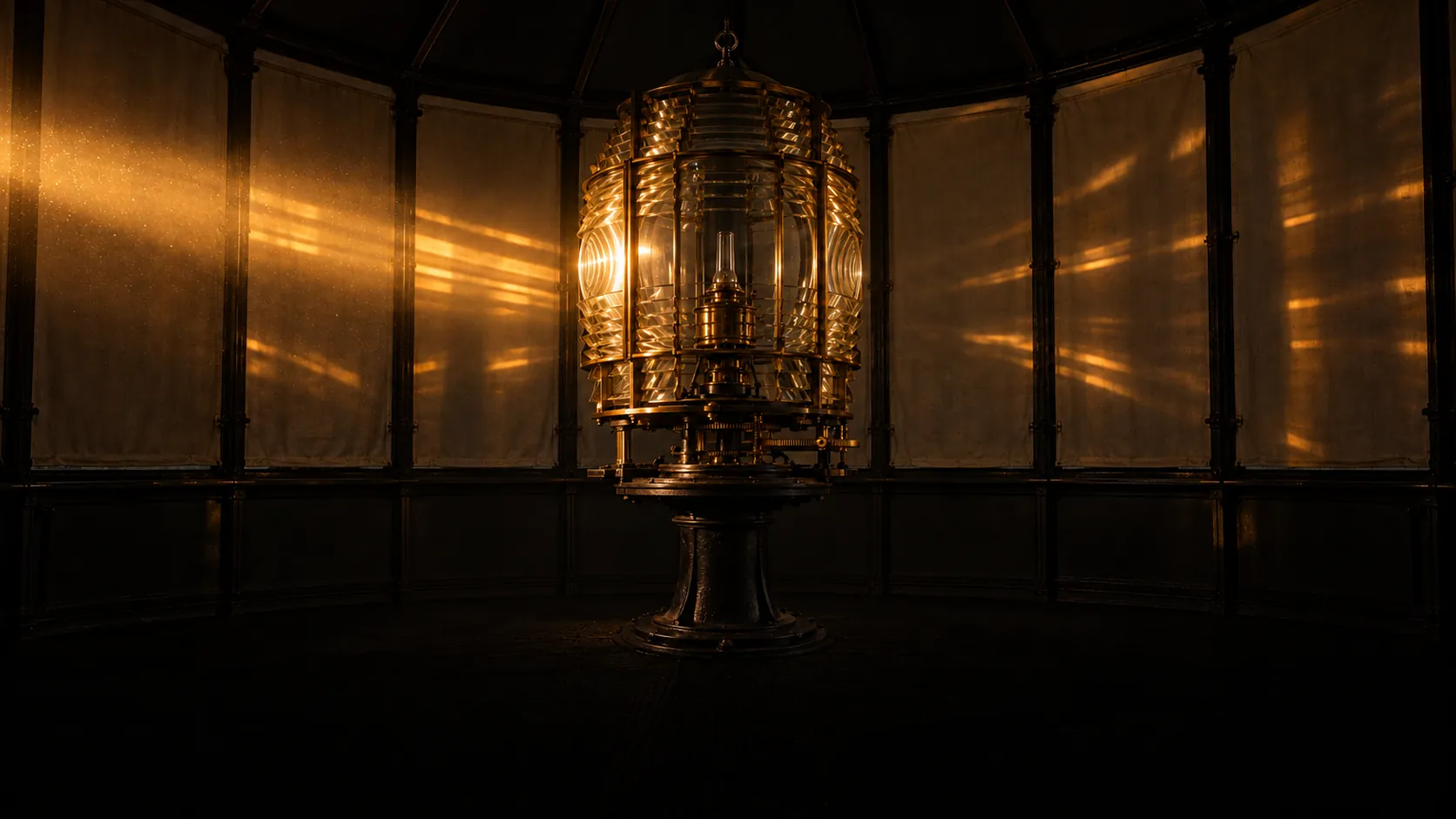
The Flannan Isles Keepers

The Flannan Isles Keepers
A relief boat reached a lighthouse in the Outer Hebrides on December 26, 1900, and found its clocks stopped. The most quoted document in the story is a log book nobody has produced.
Specimen data
- ACCESSION
- MUS-007 · case file MVL-EP002-FLANNAN
- STATUS
- ACTIVE · OPEN FOR VIEWING
- CASE STATUS
- OPEN — FATE UNKNOWN
- CLASSIFICATION
- Disappearance · Lighthouse Station · Official Record and Later Legend
- FIRST DOCUMENTED
- Summer 1899
- PRIMARY LOCATION
- Eilean Mòr, Flannan Isles, Outer Hebrides, Scotland
- LAST CONTACT TO REPORT
- December 7, 1900 – January 8, 1901
- DOCUMENTED WITNESSES
- 11 named
- SECONDARY FILE
- The legend, 1912 – present · 10 entries on file
- NAMES IN RECORD
- The Flannan Isles Mystery · The Vanishing Lighthousemen of Eilean Mòr · Flannan Isle (the 1912 ballad)
- THREAT ASSESSMENT
- [NOT ASSESSED — A LOSS, NOT A SIGHTING]
Incident Log — 16 entries
ENTRY 001
Superintendent Robert Muirhead spends more than a month on the island with the keepers who will open the station, all of them working to light it before winter. The keepers were chosen on his recommendation. James Ducat entered the lighthouse service in 1878 and was made a Principal Keeper in April 1896. Thomas Marshall, a former seaman, entered the service the same month.
The Board's lighthouse page records that the station was designed by David Alan Stevenson and built by George Lawson of Rutherglen. By the same page, the lighthouse buildings, landing places and stairs on Eilean Mòr cost £6,914, and the houses for the keepers' families at the shore station at Breasclete, on Lewis, £3,526.
// Muirhead, 1901: the keepers "were selected, on my recommendation, for the lighting of such an important Station as Flannan Islands."
ENTRY 002
The Flannan Islands light is lit for the first time.
// The day is from Historic Environment Scotland's record of the lighthouse, which says it was built in 1895–99 and "first lit on 7 December 1899". No document of 1899 in this file gives it. The Board's lighthouse page and the NRS blog both give December 7, 1899 as the day construction began. That cannot be right for a station Muirhead was working to light in the summer of 1899, and which the NRS says was built between 1896 and 1899 and was "operational for a little over a year" in December 1900. The Archive reads their date as the first lighting's, given in error to the start of building. See the claim ledger.
ENTRY 003
In the station's first winter the sea carries away the crane on the platform above the west landing, 70 feet above sea level. A new crane is put up the following summer.
// The only earlier measure, in the documents this file inspected, of what the sea can reach on this rock.
ENTRY 004
The fortnightly relief is made, and Muirhead comes out with it. When the relief is done, the ropes at the east landing are coiled and stored in their places. James Ducat, Principal Keeper, Thomas Marshall, second Assistant, and Donald McArthur, Occasional Keeper, stay on the island. McArthur is doing the duty of William Ross, first Assistant, who is on sick leave. Joseph Moore, third Assistant, is on shore duty at Breasclete.
Ducat tells Muirhead he wishes one of the signals had to be hoisted, just to learn how soon it would be seen ashore and how soon it would be acted on. Muirhead makes a note to consider a daily signal that all is well. Then he leaves.
That night the light is seen from Lewis.
// Muirhead, 1901: "I was the last person to shake hands with them and bid [them] adieu."
ENTRY 005
The Commissioners pay Roderick MacKenzie, a gamekeeper, £8 a year to look out daily for signals from the rock and to note each night whether the light is seen. His two sons, about 16 and 18, do the actual watching. Their December return records the light not seen on the 8th, 9th, 10th and 11th. MacKenzie says, and Muirhead later checks, that this is not unusual: the light sometimes cannot be seen for four or five nights together.
The tower itself, even through a powerful telescope, is not seen at all between the 7th and the 29th.
// The Board's lighthouse page puts MacKenzie's vantage point at Gallan Head, 18 miles from the light. Muirhead's report gives his address as Uig, near Meavaig.
ENTRY 006
The light is seen from Lewis. Nobody ashore sees it again until December 26.
ENTRY 007
The last entries written into the station's log book are for this day.
// The log book is not where the public can see it. The Board's own archives page says the log book "is not held", and the National Records of Scotland say it was not among the records the Commissioners deposited. Asked in 2014, the Board added, in the reply as Skeptoid quotes it, that no one knows where it is. None of the documents this file inspected quotes its December entries.
ENTRY 008 · PRIMARY INCIDENT
The particulars for the 14th, and for the morning of the 15th, are noted on the slate to be copied into the log later. As the Board describes them, they are the time the light was put out that morning, and the barometer, the thermometer and the state of the wind at 9 a.m. The last entry on the slate is Ducat's.
The morning's work is done. The lamp is trimmed, the oil fountains and canteens filled, the lens and machinery cleaned. In the kitchen the pots and pans have been cleaned and the room tidied, so whoever was cooking had finished. Muirhead concludes from this that the men disappeared in the afternoon.
// No document this file inspected quotes the slate itself, so what it said about the wind at 9 a.m. is not in this file. Muirhead's report calls the wind on the 15th westerly and of great force, and does not say where he had that from.
ENTRY 009
Captain Holman of the steamer Archtor passes the Flannan Islands at midnight and cannot see the light, though he is satisfied he should have. The Board does not hear of it in time. A letter from Henderson and MacIntosh reporting what Holman saw is dated December 28, and his signed statement December 29. By Muirhead's account the information arrived after news of the disaster had been published.
// "Midnight on the 15th" can be read two ways. If it means the night of the 14th into the 15th, the light should have been burning, since the slate records its being put out that morning. The Archive reads it as the night of the 15th into the 16th, after the men were gone. That reading is an inference. The Board's lighthouse page says the report reached it on December 18, which the documents do not support. See the claim ledger.
ENTRY 010
From the 15th to the 25th the light is not lit. The Board's lighthouse page says the relief vessel was unable to land on Eilean Mòr until the 26th. On Lewis, MacKenzie grows anxious at not seeing the light for so long, and for the two nights before it reappears he has local people helping him look for it.
// J. A. Love writes, in A Natural History of Lighthouses (2015), that the Hesperus "had been due to relieve the keepers on 20 December" and that bad weather prevented it. Keith McCloskey, in The Lighthouse (2014), says her arrival was "delayed slightly by bad weather". Wikipedia, citing C. P. Nicholson's Rock Lighthouses of Britain (1995), says she could not sail from Breasclete on the 20th. The documents of 1900–01 that this file inspected do not give the date the relief was due. On the fortnightly round the NRS describes, it would have fallen about the 21st.
ENTRY 011
The Hesperus comes to anchor under the islands at about noon. No flag is flying and none of the usual preparations for landing have been made. Captain Harvie sounds the horn, the whistle and the siren, then fires a rocket. Nothing answers. A boat is backed into the east landing and Joseph Moore, with some difficulty, jumps ashore.
The entrance gate is closed. The entrance door to the kitchen and store room is closed, and so is the door inside it. The kitchen door itself is open. The fire has not been lit for some days. The beds are empty, just as they were left in the early morning. The clocks have stopped.
Moore runs back to the landing. He comes up again with the second mate, Mr McCormack, and some of the boat's crew, and they search the station and find no one. In the lightroom everything is in order.
Harvie calls for volunteers. Two seamen, Lamont and Campbell, step forward, and the buoymaster, Allan MacDonald, who is on board, offers to stay too. The four are left to keep the light. That night Moore lights it, and on Lewis it is seen again. Harvie returns to Breasclete and telegraphs the Board: the clocks were stopped, and other signs indicated that the accident must have happened about a week ago.
// Moore, 1900: "I did not take time to search further, for I only too well knew something serious had occurred."
// Moore, in the lightroom: "The lamp was cleaned. The fountain full. Blinds on the windows etc."
ENTRY 012
Moore and the three men cross the island from end to end. Nothing at the east landing has been touched, and its ropes lie where they were left after the relief on the 7th. On the west side, the old box that held the west landing's mooring ropes and tackle, kept halfway up the railway, is gone. Some of its ropes lie strewn on the rocks near the crane. The crane itself is safe. The iron railings are started from their foundations and broken in several places, and the handrail used for making the boat's mooring rope fast is carried away entirely.
In the station Moore takes stock of the clothes. Marshall's sea boots and oilskins are gone. Ducat's sea boots are gone, and the old waterproof coat he wore because he had no oilskins. Donald McArthur's coat, the only one he ever wore, is still there. Moore writes it all to the Board on the 28th.
// Moore, 1900: McArthur's coat left behind "shows, as far as I know, that he went out in shirt sleeves."
// Two outer garments are gone and one is left. The shirt sleeves are Moore's inference from the coat, and he says so.
ENTRY 013
Muirhead lands early in the morning with John Milne, Principal Keeper from Tiumpan Head, and Donald Jack, second Assistant Storekeeper, who will keep the light with Moore. He takes statements from Harvie, McCormack, Moore and MacDonald and walks the island with the men. The sea is still too heavy for him to reach the west landing, but he gets down to the crane platform, 70 feet above sea level.
The new crane is unharmed, its jib lowered and secured to the rock and its wire rope lashed under canvas, with no sign that the men had been working at it. The wooden box of ropes, secured in a crevice in the rocks 110 feet above the sea, has been washed away, and its ropes are strewn in the crevices near the platform and tangled in the crane legs, every coil still fastened. The iron railings round the platform and down to the concrete steps of the landing are displaced and twisted. A block of stone weighing upwards of 20 cwt, more than a ton, has been torn from its place higher up and left on the concrete path. A life buoy is gone from the railings at 110 feet. The ropes that held it are untouched, with pieces of its canvas still caught in them.
That afternoon Muirhead returns to Breasclete, wires his findings to the Secretary and calls on the widows of James Ducat and Donald McArthur. He leaves the seaman Lamont on the island to keep Moore company on watch, for a week or two, because Moore is badly shaken.
// Muirhead, 1901: Moore "was naturally very much upset by the unfortunate occurrence, and appeared very nervous."
ENTRY 014
On the Sunday morning Muirhead goes to see MacKenzie. The gamekeeper is away from home, so Muirhead speaks with his two sons, who keep the watch, and reads the return book. A keeper on the lookout, he decides, would have noticed sooner that something was wrong. It would not have saved the men, he writes, but the light could have been relit earlier.
ENTRY 015
Muirhead submits his report. He has weighed the wind against the sea. The wind on the 15th was westerly, and a westerly wind, he reasons, would have blown the men up the island, where they could have thrown themselves down before reaching the brow. So he judges the sea the likelier cause.
His conclusion: "the most likely explanation of the disappearance of the men is that they had all gone down on the afternoon of Saturday, 15 December to the proximity of the West landing, to secure the box with the mooring ropes, etc and that an unexpectedly large roller had come up on the Island, and a large body of water going up higher than where they were and coming down upon them had swept them away with resistless force."
He considers a daily all-well signal and rejects it. Haze on the island would often hide it long enough to alarm the keepers' wives and families, and no day signal could have been seen between the 7th and the 29th in any case. Had there been wireless, he adds, and had it failed for some days, he would have blamed the apparatus. The last thing he would have thought was that all three men had gone.
ENTRY 016
The Crown Office writes to the Commissioners on February 18 about an inquiry under the Fatal Accident Inquiry Act 1895. The Commissioners' minutes record that Crown Counsel considered an inquiry unnecessary but asked for the report of the Commissioners' official. The Board of Trade sanctions pensions and gratuities to Mrs Ducat and her family on March 8, and gratuities to Mrs McArthur and her family on March 18. Thomas Marshall's father, John Marshall, claims for the loss of his son. On June 14 the Commissioners reply that they cannot accede to his claim. A letter from the Solicitor General about it follows in March 1902.
In the lightkeepers' registers, beside the entries for Ducat and Marshall, a note in red ink reads: "Disappeared on or about 15 December 1900". The register of deaths for the district of Carloway records all three men on the same page. The cause of death is given as "probably drowning".
// Ducat left his wife and four children, the youngest six years old. Marshall was unmarried and left his father, a brother and a sister. McArthur left a wife and two children.
Witness registry
// Names as they appear in public record. Case-scoped ids: BCT-002 / WIT-NNN.
| CASE ID | WITNESS | DATE | LOCATION | TYPE |
|---|---|---|---|---|
| WIT-001 | Robert Muirhead | Dec 7, 1900 | Eilean Mòr, relief | Relief · Last Contact |
| WIT-002 | R. MacKenzie + sons | Dec 12, 1900 | Uig, Isle of Lewis | Light Seen · Last Sighting From Shore |
| WIT-003 | Capt. Holman, Archtor | Dec 15, 1900 | At sea, midnight | Vessel Report · Light Not Observed |
| WIT-004 | Capt. Harvie, Hesperus | Dec 26, 1900 | Off Eilean Mòr | Discovery |
| WIT-005 | Joseph Moore | Dec 26, 1900 | Eilean Mòr, station | Discovery |
| WIT-006 | Mr McCormack, 2nd mate | Dec 26, 1900 | Eilean Mòr, station | Discovery |
| WIT-007 | Allan MacDonald | Dec 26, 1900 | Eilean Mòr, station | Discovery |
| WIT-008 | A. Lamont, seaman | Dec 26, 1900 | Eilean Mòr, station | Discovery |
| WIT-009 | A. Campbell, seaman | Dec 26, 1900 | Eilean Mòr, station | Discovery |
| WIT-010 | John Milne | Dec 29, 1900 | Eilean Mòr, station | Superintendent's Investigation |
| WIT-011 | Donald Jack | Dec 29, 1900 | Eilean Mòr, station | Superintendent's Investigation |
// William Ross, the first Assistant on sick leave, whose duty McArthur was doing, wrote to the Board on January 14, 1901 about McArthur's widow. Muirhead's report names John Milne, Donald Jack and Joseph Moore as the station's keepers pending permanent arrangements, and James Ferrier, Principal at Stornoway, as the man sent to Tiumpan Head in Milne's place. The crew of the Archtor and the people of Uig who helped MacKenzie look for the light are not named in any document this file inspected.
// A person named here, or their family, can ask for the name to come down: john@lithium-dreams.com.
THE LOSS OF THE FLANNAN ISLANDS KEEPERS
Official Investigation Record · Northern Lighthouse Board
- KEEPERS LOST
- 3 (the station's whole complement on duty)
- BODIES RECOVERED
- None recorded
- LAST RECORD
- The slate, morning of December 15, 1900 (readings taken at 9 a.m.)
- LIGHT NOT LIT
- December 15–25, 1900 (Muirhead)
- DAYS UNTIL DISCOVERY
- 11 (December 15 to December 26)
- HARVIE'S ESTIMATE, DECEMBER 26
- "About a week ago" (telegram)
- HIGHEST DAMAGE GIVEN A HEIGHT
- 110 feet above sea level (rope box, life buoy)
- CAUSE DETERMINATION
- "Most likely": an unexpectedly large roller (Muirhead's opinion)
- CAUSE OF DEATH, REGISTERED
- "Probably drowning" (Carloway register of deaths)
The last record of the three keepers of the Flannan Islands Lighthouse is Ducat's entry on the slate on the morning of Saturday, December 15, 1900. Nobody had seen them since the relief of December 7, and nothing of them is recorded as found. The man who investigated reckoned from the finished work that they left the station that afternoon. Beside Ducat's and Marshall's names the lightkeepers' registers say "on or about 15 December"; McArthur, an Occasional Keeper, is not in the registers.
Everything inside was in order. The morning's work on the 15th had been finished and the kitchen tidied after the cooking. The lamp was trimmed and ready to be lit that evening. Nobody lit it. Marshall's sea boots and oilskins were gone, and Ducat's sea boots and old waterproof coat. McArthur's coat was left behind. Moore took that to mean he went out in his shirt sleeves, "as far as I know". Muirhead, on Moore's word that the men wore those things only to go down to the landings, concluded that they meant to go to the landing or near it.
The sea had climbed the rock. It had torn the box of ropes from its crevice 110 feet up, ripped a life buoy from its lashings at the same height, twisted the iron railings and moved a block of stone of upwards of 20 cwt, more than a ton. Muirhead could not get down to the landing itself for the sea that was still running on the 29th.
The official investigation reached an opinion, not a finding, and it said so. The Crown held no inquiry. Neither the Board nor the National Records of Scotland holds the log book. Every later account of what the keepers felt in their last days, every quoted line from the log, every meal and chair, was written by someone who was not there, and most of it decades afterwards.
The Archive does not assert that the sea took them. The Archive notes that the superintendent who chose them, and knew two of them intimately, thought so, and said why.
Secondary File — THE LEGEND, 1912 TO THE PRESENT, 1912–2025
- REPORTING
- A poet, a magazine, authors, broadcasters and museums; none of them present in 1900
- TOTAL ON FILE
- 10 (the entries in this file; the retellings are past counting)
Everything below this line was written after 1901 by people who were not on the island in December 1900. Some of it is art, some of it is fabrication, and some of it is the careful work of correcting both. The entries run in order of the earliest appearance this file could trace. An earliest appearance found is not proof of a first.
What the legend added to the record
- A meal on the table: meat, cheese and bread, untouched (Gibson, 1912). Later retellings make it salted mutton and potatoes, half eaten.
- A chair overturned at the head of the table (Gibson, 1912)
- A passing ship that brought the news at dawn (Gibson, 1912). The Archtor's report reached the Board only after the discovery.
- A past of deaths and madness at the light (Gibson, 1912). The station had been lit for about a year.
- McArthur's coat hanging on its peg. Moore wrote only that it was left behind.
- Log entries of storm, tears and prayer, ending "God is over all" (the earliest print found is a magazine of August 1929, LEG-002; a 1965 book carried them on)
- Storms on December 12, 13 and 14. The documents this file inspected say nothing about the weather on those days.
- Ages for the keepers that the lightkeepers' registers do not support (2025)
What the legend kept from the record
- The stopped clocks
- The empty beds
- An open door. Gibson's ballad has "a door ajar"; Moore found the kitchen door open.
- The light that went out
LEG-001
In 1912 Gibson publishes a ballad in the voice of the relief boat's men. As they come in, three queer black birds sitting on a reef plunge out of sight. In the station they find a table spread for dinner and untouched, and a chair tumbled on the floor, as if the keepers had risen in a hurry. Searching, they remember the light's dark history: men dead, men gone mad, a friend who leapt from the lantern. None of this is in the 1900–01 documents, and the station was about a year old. R. W. Munro's Scottish Lighthouses (1979), as Wikipedia cites it, calls the chair and the meal erroneous.
The ballad is the earliest appearance of the meal and the chair that this file found. It is a poem, and does not claim to be anything else.
"But a door ajar, and an untouch'd meal, / And an overtoppled chair."
LEG-002
This is the earliest print Mike Dash found of the log entries that later books give for the keepers' last days: a gale, Ducat irritable and then quiet, McArthur crying, the men at prayer, and an entry for the 15th. He writes that it was "immediately obvious" the magazine was their source. He also went looking for "Fallon", and concludes, in Fortean Times 352 (April 2017), that "'Ernest Fallon' was John L Spivak", on evidence he calls "not exactly a confession, but it is near enough". Skeptoid adds, from Dash's work, that the piece was written when the magazine needed stories and Spivak needed money.
"Storm ended. Sea calm. God is over all."
// The last entry, as later books print it. This file has not seen the 1929 issue, so it cannot say which of the entries the magazine carried. The issue's title, number and month are from Dash's notes, and Gaddis gives the same month (LEG-003); both were read on the Internet Archive as search snippets, not as whole pages. Dash calls the magazine American in 2017; his 1997 book Borderlands had called it English. Against the entries stands the record: the log book was written up only to December 13. The entries for the 14th and 15th were on the slate, and the slate, as the Board describes it, held times and readings.
LEG-003
Gaddis retells the case with the log entries, Ducat "irritable" among them, and names his source: an article by Ernest Fallon "published in True Strange Stories magazine back in August, 1929". For years, as Skeptoid reports it, nobody could confirm the source he named, until Dash found it (LEG-002). It is the version later writers repeat.
LEG-004
The case becomes an opera. Peter Maxwell Davies writes it in 1979 for the Edinburgh International Festival, and it is first performed in Edinburgh on September 2, 1980. It is one of many works the disappearance has inspired, and the Archive lists it as a sign of how far the story had travelled from the slate.
LEG-005
Mike Dash sets the story against the 1900–01 record, piece by piece. Skeptoid calls it the definitive piece on the case. In Fortean Times 352 (April 2017) he returns to the magazine the log entries came from, and to the man behind its byline (LEG-002). In 2025 he tells Metro that the log entries do not fit a working log, because they carry personal details no keeper would record there.
// This file could not read Dash's paper: academia.edu refused every request. What is said of it here comes through Skeptoid (Tier 3) and Metro (Tier 2). His 2017 article, read on the Internet Archive as search snippets, cites the paper under his name alone.
LEG-006
Asked for the station's log book, the Board replies that it does not hold it, and adds that logs of that kind recorded tasks, weather and the state of the sea.
"We do not hold the log book and no-one is aware of its whereabouts"
// As quoted by Skeptoid; this file has not seen the reply itself. The Board says the first half today on its own archives page: "the log book for the Flannan Isles Lighthouse is not held". The National Records of Scotland say the same in their own words: the log book was not among the records the Commissioners deposited.
LEG-007
McCloskey argues that McArthur quarrelled with the others near the west landing, and that the fight ended with all three over the edge. His case rests on a description of McArthur's character, which he gives in Metro in 2025, along with his word that he spoke with descendants of the keepers. No 1900–01 document describes McArthur's character or his health. The theory is McCloskey's, and the Archive cites it as his.
LEG-008
A feature film based on the case premieres at the Sitges Film Festival in October 2018 and opens in the United Kingdom in March 2019 (Wikipedia, citing BBC News, 2019-03-29). The Northern Lighthouse Board and the National Records of Scotland both mention it on their pages about Flannan, and both follow the mention with the same reminder: three men lost their lives, and their families never learned for sure what happened.
LEG-009
A national museum's page tells the legend as fact. It presents the log's "strange entries" of storm and low spirits as real, says the keepers' log proved the landing damage came before the disappearance, and spells the steamer "Anchtor".
// A museum is a Tier 2 source. This page is wrong in at least three places. Tier is not truth.
LEG-010
Metro marks 125 years with Dash's and McCloskey's views side by side. It prints the log entries as Marshall's, and gives the keepers' ages as Ducat 43, Marshall 40 and McArthur 28.
// The registers make Ducat 44 in December 1900 (born August 11, 1856) and Marshall 31 or 32 (27 when he entered the service in April 1896). McArthur was an Occasional Keeper and is not in the registers, so his age is not in this file.
// Final count: The case has been retold in books, broadcasts, songs, a television serial, a video game, a film and on more web pages than this file could count. The retellings this file read, from the 1912 ballad to the museum page, carry the meal, the chair or the log. The 1900–01 documents carry none of the three.
Explanatory Frameworks
FRAMEWORK-A: THE SEA
- PRIMARY ADVOCATES
- Superintendent Robert Muirhead (report, January 8, 1901); Captain Harvie, master of the Hesperus, in part: his telegram of December 26, 1900 gives two causes, "blown over the cliffs or drowned"; the register of deaths, Carloway ("probably drowning")
Evidentiary basis
- The sea had reached 110 feet. It tore the rope box from its crevice and the life buoy from its lashings there, and moved a block of stone of upwards of 20 cwt (Muirhead).
- Marshall's oilskins and Ducat's waterproof were gone with both men's sea boots, and Moore told Muirhead the men wore those only to go down to the landings (Muirhead; Moore).
- The east landing was untouched. All the damage was on the west (Moore; Muirhead).
- The rock had already lost a crane to the sea the winter before (Muirhead).
- A later Principal Keeper, Walter Aldebert (1953–1957), photographed spray striking the lamphouse and once nearly lost his life to water running back off the crest of the island after a wave came over it (Skeptoid, Tier 3).
Limitations
- Muirhead could not get down to the west landing for the sea, and he called his conclusion an "opinion".
- The damage cannot be dated. It was seen between December 27 and 29. It could have been done before the 15th or after it.
- No body, garment or wreckage is recorded as found.
- It does not say why all three men went down together and left the light unattended, or why McArthur's coat was left behind.
- There is no instrumental record of the sea at the landing on December 15.
- Muirhead set the wind aside because it was westerly and would have blown the men up the island. That is an argument from the wind's direction, not something anyone saw, and Harvie's telegram had allowed for the wind.
// Framework A is the investigation's own explanation. The damage is what Muirhead saw; that it took the men is what he inferred. The record cannot place the men and the sea at the landing at the same moment.
FRAMEWORK-B: HUMAN CAUSES
- PRIMARY ADVOCATES
- John A. Love (A Natural History of Lighthouses, 2015, as Wikipedia cites it); Walter Aldebert, Principal Keeper 1953–1957 (as Skeptoid gives him; Wikipedia, and Mike Dash's Borderlands, 1997, call him a keeper); Keith McCloskey (The Lighthouse, 2014); Skeptoid (2018)
Evidentiary basis
- A fine: Marshall is reported to have been fined five shillings when his equipment was washed away in an earlier gale (Wikipedia, citing Love), or the keepers when landing tackle was left out and damaged six months before (Skeptoid). Fear of a second fine would explain going down in bad weather to secure the box.
- A rescue: two men go down to secure the ropes; McArthur sees the sea coming, or is called, and runs out in his shirt sleeves to help, and is taken with them (Love, as cited; Skeptoid). Aldebert thought one man may have been washed in and the others lost trying to save him (Wikipedia).
- A quarrel: McCloskey's case that McArthur fought with the others near the cliff edge (Metro, 2025).
- The clothes fit a sequence: two men's sea boots and outer coats gone, which Moore said they wore only for the landings, and the third man's coat left, which Moore took to mean he went out in his shirt sleeves. The hurry is the reconstruction's, not Moore's.
Limitations
- The fine is not in the documents the Board and the NRS publish, and the secondary sources date it differently.
- No 1900–01 document records a quarrel, a temper or bad feeling among the three. Muirhead knew Ducat and Marshall "intimately" and McArthur well, and the keepers who opened the station were chosen on his recommendation.
- These are three reconstructions, and they cannot all be true.
- Each version, as its advocates tell it, still ends with the men in the sea.
- The rescue and the quarrel are reconstructions. Nobody saw any of it.
// Framework B offers a reason for the coat. Every reason it offers is a reconstruction, and some rest on sources this file could not read in full.
FRAMEWORK-C: THE ISLANDS THEMSELVES
- PRIMARY ADVOCATES
- The Lewis men who went to the Flannans for birds and sheep, as recorded by Martin Martin (A Description of the Western Islands of Scotland, 1703); local talk of the Phantom of the Seven Hunters, which C. P. Nicholson calls "a nebulous being" (Rock Lighthouses of Britain, 1983); Wikipedia, citing his 1995 edition, makes it a boat filled with ghosts
Evidentiary basis
- In Martin's account (1703), the Lewis crews who went out each summer kept a strict code on the Flannans. They sailed out only on an east wind, and if it turned westerly before or at landing they hoisted sail and went straight home. Ashore, they uncovered their heads and turned sunwise, thanking God for their safety. Within about 20 paces of the altar of St Flannan's chapel they stripped off their upper garments, and they said three prayers in the morning and as many at evening. They would not call the islands by name, only "the country" (Martin, Tier 1 for the custom as his informants described it).
- One of Martin's informants, who had been on the islands the year before, called them places of inherent sanctity, where no one landed without finding himself more disposed to devotion (Martin).
- Among the stories that followed the loss, Nicholson gives the Phantom of the Seven Hunters, "a nebulous being" (1983), and Wikipedia, citing his 1995 edition, says its influence was "widely suspected locally".
- The wind on December 15, 1900 was westerly (Muirhead). It was the wind in which the old crews would not land (Martin).
Limitations
- Martin describes customs nearly two hundred years older than the loss, kept by summer crews, not by keepers who lived on the rock. Nothing in the record says the keepers knew of them.
- The Phantom of the Seven Hunters reaches this file through one book, Nicholson's: a line of its 1983 edition, read as a search snippet, and Wikipedia's account of the 1995 one. Neither is a record of 1900.
- A westerly wind on a west landing is a seaman's reason to stay away, before it is anything else.
- It describes a belief, not a mechanism, and no record can test it.
// Framework C has the oldest document behind it, and the document is about belief. The belief is in the record. The record cannot test it.
Field Notes
// The following is the human editorial voice of this archive. It is not objective. It is accurate.
The Archive does not have a conclusion, and the Northern Lighthouse Board stopped at an opinion. Its superintendent offered "the most likely explanation", and the register of deaths settled for "probably". The Crown did not hold an inquiry. That is where the official record stops.
Here is what can be said without qualification:
Three men died. James Ducat, Thomas Marshall and Donald McArthur disappeared from Eilean Mòr on or about December 15, 1900, in the words the registers use for Ducat and Marshall, and their families never learned for certain what happened to them. The Board says so on its own page, and so does the National Records of Scotland. The Archive says it here, before anything else.
Here is what the record can say without qualification: the station was in order, the morning's work was finished, Ducat's and Marshall's sea boots and outer coats were gone and McArthur's coat was not, and the sea had reached 110 feet up the west side of the island.
On the log book
The most quoted document in this story is a log book nobody has produced. The real one was written up to December 13, and neither the Board nor the National Records of Scotland holds it. The famous one, with its tears and its prayers and its last line, comes from a magazine of August 1929, under a byline Mike Dash concludes was John L. Spivak's, and a 1965 book carried it on.
Documentation of an unproven process is fiction. The famous log is the clearest case of it in this file. No document of 1900–01 quotes a word of it. Its last entry is dated December 15, two days after the real log's last written day. Mike Dash told Metro its entries "don't fit", because they carry personal details a working log would not. It looks like a record, it is quoted like a record, and it is printed today by people who should know better. The real documents are quieter: a telegram, a letter, a report with measurements in it. They are also stranger, because they do not explain what happened, and they do not pretend to.
On tier and truth
This file grades its sources from Tier 1, the documents of 1900–01, down to Tier 4, the enthusiast pages. The grading is useful. It is not a verdict. A national museum's page (LEG-009) prints the invented log as fact. The Board's own lighthouse page gives two dates the Board's own documents contradict. A podcast with no institution behind it (Skeptoid) gave this file its first account of where the log entries came from, which Dash's own article bears out, and the same podcast is wrong about an inquest that never sat. Tier is a reason to look harder. It is not a reason to stop looking.
On the westerly wind
Nearly two hundred years before the station was built, in Martin's account, the Lewis men who sailed to the Flannans turned for home if the wind went westerly before they landed. On December 15, 1900, the wind was westerly. That fact is in Muirhead's report because it is how he chose the sea over the wind.
The Archive does not draw a line between those two facts. It sets them side by side, because they belong to the same rock. The plainest link between them is a seaman's: a west wind puts the sea on the west side of the island.
On the coat
Donald McArthur's coat stayed behind. Later retellings hang it on a peg; Moore wrote only that it was left. Writing two days after he found the station empty, he was careful to say what that meant "as far as I know". Something made a man who never wore any other coat leave it behind in December in the Outer Hebrides. Nothing in the record says what, and the Archive leaves it there.
Final position
The case is open.
The log is missing. The other log is a story.
The last record of the three men is Ducat's entry on the slate on the morning of December 15, 1900. After it the record has only what was found: a tidy kitchen, a trimmed lamp that nobody lit, a missing box of ropes and a coat left behind. It does not show what happened, and it may never show it.
The Museum of Ongoing Events does not close its files on the basis of discomfort with ambiguity. It closes files when the question is answered.
This one is not answered.
Come back.
// The Museum of Ongoing Events does not adjudicate. The Museum notes what witnesses reported, preserves the record intact, and keeps the file open. Some things are not solved. They are accumulated.
Source transmission
// This exhibit was assembled from research conducted during:
→ BROADCAST: The Flannan Isles Keepers — MVL-EP002→ CABINET: ARC-009 · The Other Log// The research lives here after the broadcast ends.
Now Showing